
T: +86-13738486406
E: yafeibathroom@gmail.com
E: yafeibathroom@gmail.com
Building 3, West Head, Wuxing Community, Tangxia Town, Ruian City, Wenzhou City, Zhejiang Province, Wenzhou, Zhejiang, China
Views: 0 Author: Site Editor Publish Time: 2026-02-02 Origin: Site


When it comes to installing a shower set, the material, design, and installation method are crucial to ensuring longevity, performance, and user satisfaction. Whether you’re installing a shower in a residential bathroom or in a high-traffic commercial space, understanding the key differences in installation requirements is essential. This guide will help you navigate the different factors to consider when installing a shower set in both home and commercial environments.
A shower set plays a critical role in the overall functionality and aesthetic of both home and commercial bathrooms. In home settings, the shower set needs to provide comfort, convenience, and style. In contrast, commercial spaces like hotels, gyms, or spas often require shower sets that offer durability, high performance, and efficiency to withstand heavy daily usage.
The installation process is crucial to ensuring these goals are met. A properly installed shower set ensures that water flow is consistent, pressure is optimized, and the unit is set up for long-lasting performance.
A shower set installation is not a simple task—it’s a process that requires attention to detail, especially regarding water pressure, flow rate, and structural compatibility. For home installations, the complexity can vary depending on the existing plumbing system and bathroom size. For commercial installations, the demands are often higher, requiring professional-grade shower systems that can handle multiple users simultaneously.
The installation process for both environments significantly impacts the performance of the shower set and can affect its lifespan, water efficiency, and user experience.
In residential installations, homeowners often focus on aesthetics, comfort, and budget. However, there are several important factors to keep in mind:
The layout of the bathroom significantly impacts the type of shower set you can install. In a smaller bathroom, a handheld showerhead or wall-mounted set may be the best choice due to space constraints. In larger bathrooms, a ceiling-mounted or rain shower set may be preferred for a more luxurious, spa-like experience.
Ensure that your existing plumbing system can handle the water flow required for your new shower set. For instance, if you’re upgrading from an older system, you might need to check the pipe sizes or water pressure to ensure compatibility with modern shower sets, especially those that require higher water pressure.
While some homeowners may attempt a DIY installation, certain shower sets, particularly those with complex systems or thermostatic controls, may require professional help. Understanding your skill level and the complexity of the installation is key to deciding whether to hire a plumber or attempt the installation yourself.
Installing a shower set in a home bathroom can vary depending on the type of unit you’ve chosen. However, here are the general steps:
Step | Description |
Begin by removing the old showerhead or shower system. Ensure the area is clean and clear of debris. | |
Install the Valve and Plumbing | If you’re installing a new valve, make sure it’s correctly aligned with your plumbing system. You may need to adjust the pipes to ensure proper alignment. |
Mount the Showerhead | Attach the showerhead to the wall or ceiling mount. For handheld models, ensure the hose is properly connected to avoid leaks. |
Check for Leaks | After installing, turn on the water and check for any leaks. Adjust connections as needed to ensure everything is tightly sealed. |
Adjust the Water Flow and Pressure | Fine-tune the water pressure and flow to your preference to ensure optimal performance. |
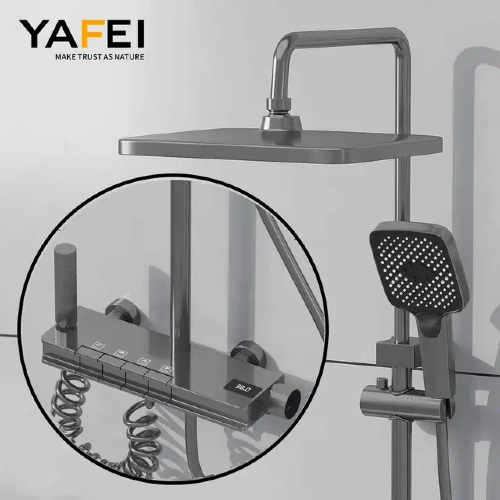
Commercial installations require a higher level of consideration due to the high demand and traffic that these shower sets will experience. Here are some factors to consider:
In commercial environments, such as hotels or gyms, water flow and pressure are critical. Multiple users may need to use the shower sets throughout the day, which means you’ll need to ensure that the water pressure and flow rate can accommodate the needs of several people at once without affecting performance.
Commercial shower sets often require a more robust water delivery system, with larger pipes and higher water flow capacities, which ensures consistent performance even during peak usage.
Commercial environments require shower sets that can withstand constant use. Unlike residential settings, commercial shower sets are subject to frequent wear and tear. Therefore, the material chosen should be highly durable, resistant to corrosion, and easy to maintain.
Commercial installations must comply with stricter building codes and regulations compared to residential ones. For example, ADA (Americans with Disabilities Act) compliance may be necessary for shower installations in public spaces, such as gyms and hospitals, ensuring accessibility for all users.
The installation process for commercial shower sets generally requires a professional plumber or contractor due to the complexity involved:
Design the Layout: Plan the layout of the showers, especially in high-traffic areas. Ensure the shower units are spaced adequately and that water delivery systems can handle the load.
Install Water Systems: Commercial installations require larger, more powerful piping systems to handle multiple showerheads. These systems need to be connected to the building’s main water supply and properly pressure-tested.
Install Showerheads and Controls: Depending on the design, install multiple showerheads (often wall-mounted or rain shower units) and ensure that the water temperature and flow controls are accessible for multiple users.
Ensure Proper Drainage: Install high-capacity drainage systems to handle large volumes of water, and ensure the floor is adequately sloped for efficient water runoff.
Test for Leaks and Pressure: Check for leaks, verify water pressure, and ensure that the shower system works efficiently across all units.
Final Inspection: Ensure that all plumbing meets local building codes and that all fixtures are securely installed.
While the basic principles of shower set installation are similar for both home and commercial use, several differences make each installation type unique:
Home Installations: Home bathroom layouts are generally smaller, and shower set placement is often dictated by space limitations. A handheld showerhead or smaller rain shower is usually preferred.
Commercial Installations: Commercial shower setups are often larger and require careful planning to accommodate multiple showerheads and high water pressure.
Home Installations: Water pressure in residential bathrooms is typically lower, and shower sets are designed to provide adequate pressure for personal use.
Commercial Installations: Commercial systems require higher water flow and pressure, often needing specialized equipment to ensure multiple users can shower simultaneously without diminishing water pressure.
Home Installations: Home shower sets prioritize aesthetic appeal and comfort, so materials like brushed nickel, chrome, or stainless steel are commonly used.
Commercial Installations: Durability and ease of maintenance are paramount. Commercial shower sets often use heavy-duty stainless steel or aluminum, which can handle constant usage without degrading over time.
Home Installations: Home installations follow basic plumbing codes, but compliance with accessibility standards is generally not required unless specified (e.g., in a home for elderly individuals).
Commercial Installations: Commercial installations must adhere to strict safety regulations, including accessibility features such as ADA-compliant showers for public spaces.
When choosing a shower set for home use, the focus should be on comfort, design, and budget:
Aesthetic Preferences: Consider materials and finishes that match your bathroom decor (e.g., chrome for modern designs, brushed nickel for contemporary looks).
Comfort: Prioritize features like water pressure adjustment and ergonomic designs for ease of use.
Budget: Homeowners have a wider range of shower set options at different price points, but durability and material quality should always be considered.
For commercial environments, the focus shifts to durability, efficiency, and maintenance:
Durability: Choose shower sets made of heavy-duty materials like stainless steel to handle high traffic.
Efficiency: Opt for shower sets that minimize water consumption while maintaining performance, ensuring lower utility bills.
Maintenance: Easy-to-clean shower sets that require minimal maintenance are essential in commercial settings.
Choosing the right shower set for your installation, whether for home or commercial use, depends on various factors, including the specific environment, water requirements, and budget. In home installations, comfort and design are prioritized, offering a more personalized shower experience. Commercial installations, however, emphasize durability, efficiency, and compliance with regulations to meet the higher demands of frequent use.
At Wenzhou Yafei Aluminum Products Co., LTD, we understand the unique needs of both home and commercial installations. Our wide range of high-quality shower sets is designed to meet diverse requirements, from luxury and comfort to robust durability for commercial spaces. We offer products that combine style, efficiency, and performance to ensure long-lasting satisfaction.
Whether you're looking to enhance the aesthetics of your bathroom or equip a commercial facility with durable, high-performance shower systems, we are here to help. Feel free to contact us for expert advice and assistance in choosing the perfect shower set that fits your needs. We are committed to providing solutions that blend functionality with quality and design.
Discuss the feasibility of DIY installations for simple shower sets and when it’s better to hire a professional.
Highlight the unique installation challenges in commercial environments, including managing high water pressure and handling multiple shower units.
Explain how to check local codes and the importance of meeting plumbing and safety regulations for both residential and commercial installations.
Provide insights into the optimal water pressure range for home showers, including how to adjust the pressure to ensure comfort.
Discuss the maintenance needs of commercial shower sets, including cleaning frequency and inspections to ensure continued performance.


